Reem Alabali-Radovan was born in Moscow in 1990 and has been Germany's Federal Minister for Economic Cooperation and Development since 6 May 2025. This biography follows her official Bundestag and Federal Government CVs. It quotes her own website only where those sources are silent, and says so where it does.
Born
1 May 1990, Moscow
Party
SPD
Office
Federal Minister, BMZ
Parliament
Bundestag since 2021
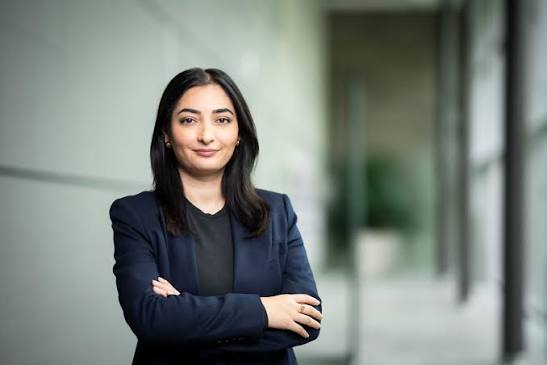
Fig. 01Portrait. Photographer and date not stated in the supplied file.
A note on the nameOfficial German government sources now write her name as Reem Alabali Radovan, without a hyphen. Earlier documents, from 2021 to 2024, use Alabali-Radovan. This site uses the hyphenated form in its title and refers to both.
1990
Birth & early environment
Reem Alabali-Radovan was born on 1 May 1990 in Moscow, then the capital of the Soviet Union. Both the Bundestag and the Federal Government biographies give this date and place. Her own website gives a little more: “Geboren 1990 in Moskau, führte mich mein Lebensweg im Alter von sechs Jahren mit meiner Familie, die vor den politischen Verhältnissen im Irak flohen, nach Mecklenburg-Vorpommern” (born in Moscow in 1990, at the age of six I came to Mecklenburg-Western Pomerania with my family, who had fled the political conditions in Iraq).
The same text names the first reception centre for refugees in Horst as a place that shaped her personally. Beyond these statements, this site does not describe her parents, their professions or her private childhood. Those are not documented in the sources used here.
–2008
Childhood & schooling
She grew up in Mecklenburg-Western Pomerania and went to school in Schwerin, the state capital. In 2008 she passed her Abitur at the Gymnasium Fridericianum in Schwerin, according to the Bundestag biography. Schwerin remains the city where she lives and her political base. Her website describes her as “Sozialdemokratin. Antirassistin. Schwerinerin.”
From 2008 to 2013 she studied political science at Freie Universität Berlin and graduated with a Bachelor of Arts. The official sources do not name a thesis topic or a specialisation, and this site does not claim one.
2012–2014
German Orient Institute
While finishing her degree and afterwards, she worked from 2012 to 2014 as a research associate (wissenschaftliche Mitarbeiterin) at the Deutsches Orient-Institut in Berlin, a research institute on the politics and economies of the Near and Middle East.
2012–2014
International affairs: NUMOV
In the same period she worked at the Nah- und Mittelost-Verein (NUMOV), the German Near and Middle East Association, an association that promotes economic relations with the region. The Bundestag records that she started as an assistant to the country desks and became a country desk officer (Länderreferentin) from 2013.
2015–2018
Mecklenburg-Western Pomerania: administration
In 2015 she returned to Mecklenburg-Western Pomerania. Until 2018 she was a caseworker (Sachbearbeiterin) at the State Office for Internal Administration, the Landesamt für innere Verwaltung.
2018–2020
Integration policy
From 2018 to 2020 she headed the office of the state government's Integration Commissioner, located at the Ministry for Social Affairs, Integration and Equality. The office coordinates integration policy across state departments, municipalities and civil society.
2020–2021
State Integration Commissioner
In 2020 she became the state government's Integration Commissioner herself (Integrationsbeauftragte der Landesregierung) and served until her move to federal politics in 2021. The Bundestag's register of interests notes that she holds a right to return to this post.
Since 2021
Bundestag
The Federal Government biography dates her SPD membership to 2021. In the federal election of 26 September 2021 she won the direct mandate in constituency 12, Schwerin – Ludwigslust-Parchim I – Nordwestmecklenburg I, with 29.4 per cent of first votes. In the February 2025 election the AfD candidate won the constituency, and she returned to the Bundestag via the SPD's Mecklenburg-Western Pomerania state list. Since 2022 she has been deputy state chair of the SPD in Mecklenburg-Western Pomerania.
Federal Government: migration, refugees and integration
In December 2021 the new coalition of SPD, Greens and FDP appointed her Minister of State at the Federal Chancellery (Staatsministerin beim Bundeskanzler) and Federal Government Commissioner for Migration, Refugees and Integration. In this role she advised the government, reported to parliament and spoke for the interests of people with a migration history.
Anti-racism, 2022–2025
On 23 February 2022 the cabinet also made her the first Federal Government Commissioner for Anti-Racism. Her first situation report, Rassismus in Deutschland, followed in January 2023.
When the coalition of CDU/CSU and SPD took office under Chancellor Friedrich Merz, she was appointed Federal Minister for Economic Cooperation and Development on 6 May 2025. She is also an ex officio member of the KfW Board of Supervisory Directors. The Bundestag biography lists her among the World Economic Forum's Young Global Leaders, Class of 2025.
As minister she has represented Germany at conferences including the Fourth International Conference on Financing for Development in Seville (2025) and the Ukraine Recovery Conference in Gdańsk (June 2026). She led a business delegation to Indonesia in August 2026. In January 2026 she presented a reform plan for the ministry. She has also defended successive reductions of the development budget in the Bundestag.
Deutschland ist angewiesen auf internationale Zusammenarbeit und weltweite Partnerschaften.“Germany depends on international cooperation and worldwide partnerships.” (translation)
22 September 2026 · Before the UN General Assembly · bmz.de