Six modules, one for each region and one for the multilateral system. Each sets out the development context, German cooperation, economic opportunities, climate, social challenges and current examples from 2025–2026. Amounts are announcements or commitments as stated by official sources.
Module 01
Africa
Development context
Africa has the largest share of the world's hungry people. FAO projects that nearly 60 per cent of those still hungry in 2030 will live there. The Sudan war has produced the world's largest displacement crisis.
German cooperation
The BMZ Africa strategy (2023) is aligned with the African Union's Agenda 2063 and focuses on a just transition, decent jobs and gender equality. Since 2004 the BMZ has committed more than €750 million to the African Union. Government negotiations with the AU took place in Addis Ababa in November 2025.
Economic opportunities
Renewable energy, the African Continental Free Trade Area and skills partnerships are recurring themes.
Climate & social challenges
Drought, food insecurity and conflict in the Sahel and the Horn of Africa; the reform plan names both as regional priorities.
Current examples
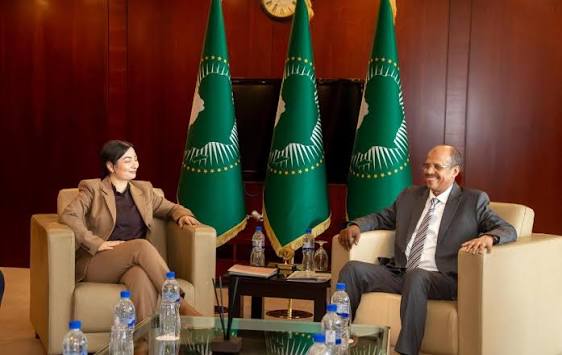
10 December 2025: first visit to the AU headquarters, with Sudan as the focus. January 2026: Sierra Leone, on hunger and school feeding. 15 April 2026: the Berlin Sudan conference mobilised €1.5 billion, of which Germany pledged €232 million (€20 million from the BMZ).
Fig. 01Talks in an office decorated with African Union flags. Date not stated in the supplied file.
Module 02
Asia
Development context
Fast-growing economies with high emissions and large energy needs, alongside persistent poverty and malnutrition.
German cooperation
Energy transition partnerships. Germany co-leads the International Partners Group of Indonesia's Just Energy Transition Partnership (JETP) with Japan.
Economic opportunities
Indonesia is one of nine new focus countries for closer cooperation with German business.
Climate
Coal phase-down, grids and renewables are central to the JETP's target of mobilising about US$20 billion.
Current example
17–20 August 2026: visit to Indonesia with a business delegation. See Economic cooperation.
Module 03
Latin America
Development context
Middle-income economies with high inequality, rich biodiversity and growing climate risks.
German cooperation
Forest protection, the energy transition and green hydrogen. Under the reform plan, emerging economies are to be financed increasingly through loans.
Climate
At COP30 in Belém (November 2025), Germany committed €1 billion over ten years to the Tropical Forest Forever Facility, together with the Environment Ministry.
Current example
5–7 November 2025: travel to São Paulo and to COP30 in Belém, Brazil.
Module 04
Middle East
Development context
War in Gaza, regional escalation, Syrian displacement and the slow return of refugees. Since December 2024, around 196,000 Syrians have returned from Jordan, according to UNHCR.
German cooperation
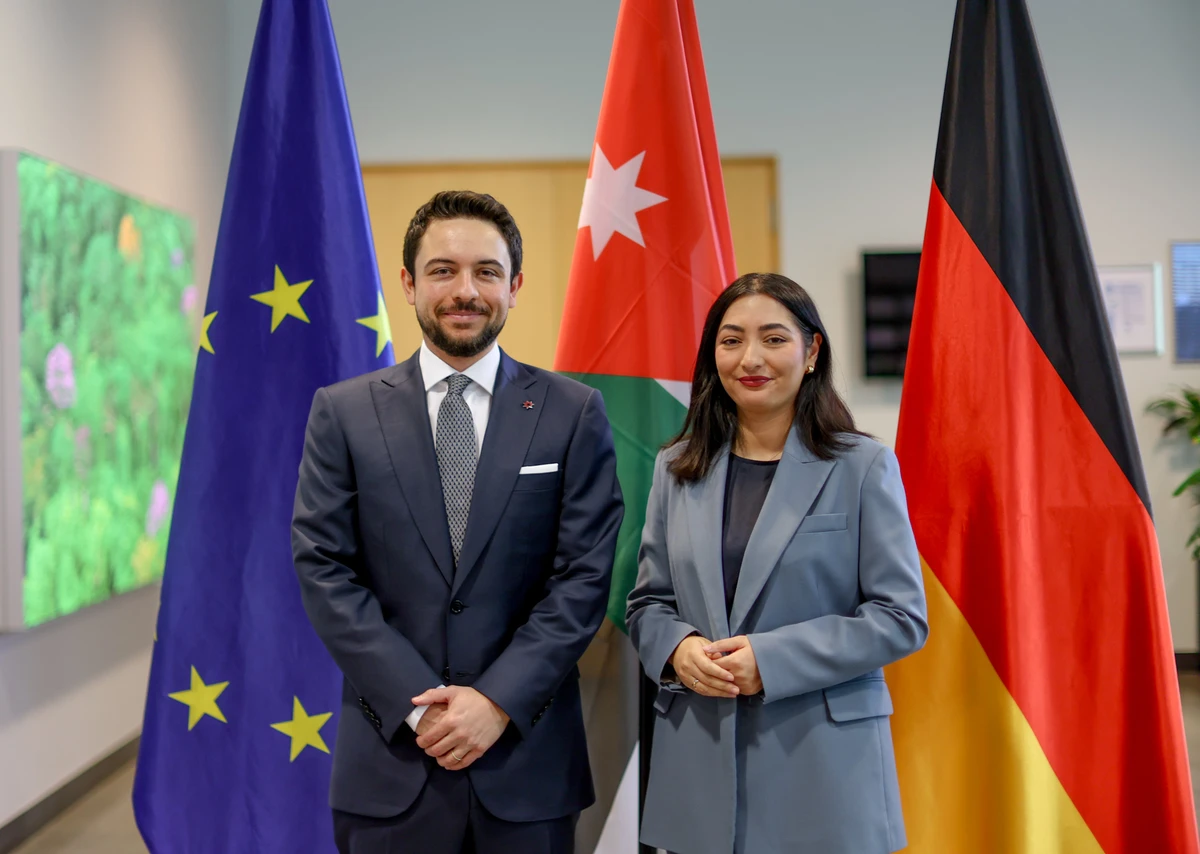
Jordan has been a partner since 1959. In July 2026 Germany and Jordan agreed €684 million for 2026–27, covering water, education, vocational training, the private sector and support for communities hosting Syrian refugees.
Social challenges
Water scarcity, youth unemployment and the strain on host communities.
Current examples
August 2025: travel to Israel, Ramallah, Jordan and Saudi Arabia, with modular shelters announced for Gaza. 31 March 2026: a €177 million package for Jordan, Lebanon, the Palestinian territories and a Red Sea desalination project. 1 June 2026: a trip to Lebanon was broken off during the approach to Beirut because of Israeli strikes. 13 July 2026: Palestine Donor Group in Brussels, where Germany pledged €66.5 million in new funds for early recovery in Gaza.
Fig. 02A bilateral meeting in front of the flags of the EU, Jordan and Germany. Date and place not stated in the supplied file.
Module 05
Europe
Development context
Ukraine's recovery needs are estimated at almost US$588 billion over ten years (RDNA5, 2026). The EU neighbourhood is a priority region in the reform plan.
German cooperation
About €2.5 billion of BMZ support for Ukraine since February 2022: hospitals, energy, skills and municipal partnerships.
Current example
25 June 2026: Ukraine Recovery Conference in Gdańsk. See the Ukraine case study.
Module 06
Multilateral partners
Institutions
World Bank and regional development banks, UN agencies, the Global Fund, Gavi, the EU.
Commitments
€600 million for Gavi (June 2025); €1 billion for the Global Fund for 2026–28 (October 2025); €45 million for a World Bank fund for maternal and child health (April 2026).
Budget shift
The 2027 draft raises contributions to development banks to €1.36 billion and reduces UN contributions to €442.7 million.
Current example
She attended the UN General Assembly in New York in September 2025 and again in September 2026.
Sources
BMZ, African Union: bmz.de; Africa strategy: bmz.de
BMZ, Middle East package, 31 Mar 2026: bmz.de; Jordan: bmz.de; Jordan Ministry of Planning, July 2026: mop.gov.jo
BMZ, Palestine Donor Group, 13 Jul 2026: bmz.de; ZDF on the aborted Lebanon trip: zdfheute.de